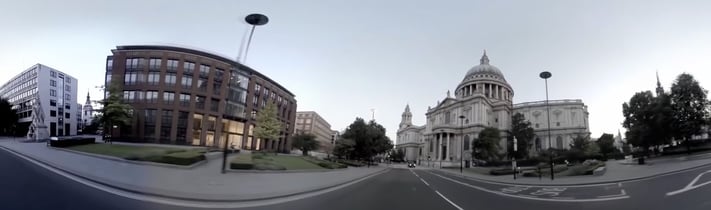
 At Happy Finish we’ve worked on several innovative and immersive 360 degree Virtual Reality projects for some very high profile clients that include Asda, Becker Beer and Subway.
As a Colourist, working with the footage for these films presents some interesting challenges, and I’ve found that there are two different ways you can approach grading such a project.
Grading after stitching
The first is to grade the footage after it’s been stitched together. This is more time efficient, so it’s a good option when you’re working with a smaller budget. If the footage between all the cameras is already consistent then this method is great for adding more style and finish to the image as a whole. It’s certainly a different experience grading the stitched footage, as right now there’s no way to grade the footage in it’s natural 360 environment, so we grade the stitched shots stretched out onto one plane.
Grading before stitching
The other approach is to grade the footage separately before the stitching process. This means the grade is going to take longer as you have to work with the footage from the different cameras separately, but it also gives you much more control. This method is the best way to ensure an even, consistent look for the project, as any differences in the way the cameras have captured the footage can be corrected before the stitching takes place.
Finer grading and compression
Stitching the footage also means it will need to be compressed, so this is also the time to address any finer grading points such as working with skin tones, or keying certain colours whilst you can still work with the raw footage. Once this has been completed and the footage has been stitched together then there is always the possibility to add another level of polish and add some final grading tweaks. All that is left to do is to check what the footage looks like on a VR headset or through a program that lets you view the footage in a 360 environment to see if there are any final amendments.
Whichever approach you choose it’s important to consider both methods, or at least be aware that these two approaches are both feasible. 2015 has been a busy year for us in terms of VR projects, we’ve used our experience to deliver some complex challenges. If you want talk about stitching techniques, have other VR related question or want to see more of the great grading work we do here then take a look at our website and get in touch. We’d love to hear from you.